After More Than a Decade, Inland Rail Trail Finally Reaches Central Vista

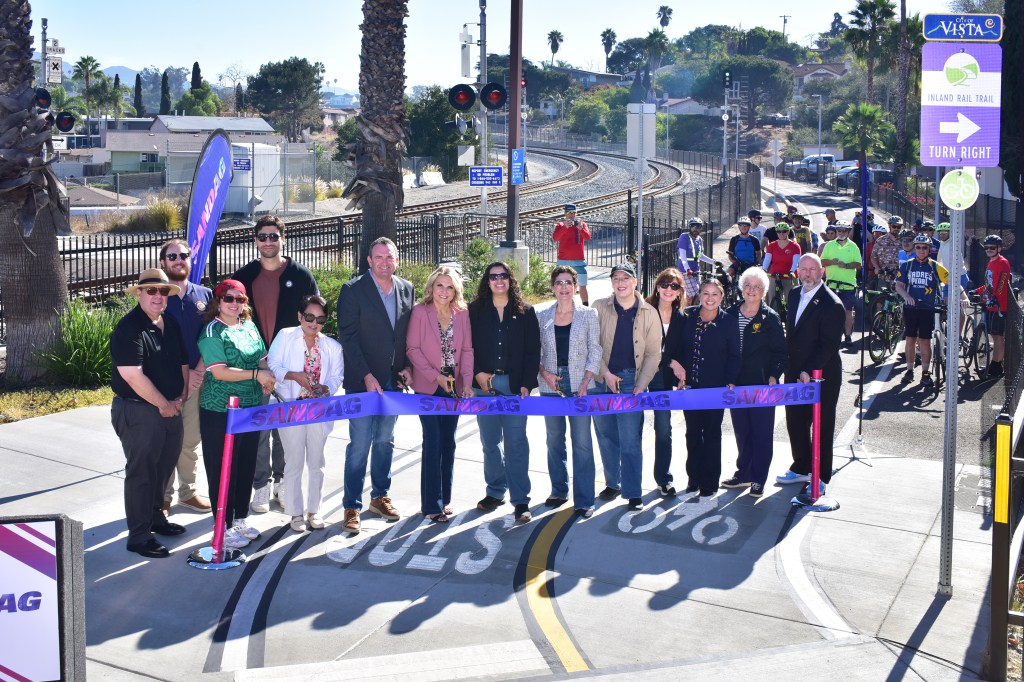
Late last month, September 26, the San Diego Association of Governments (SANDAG) and local officials celebrated a ribbon cutting and ceremonial bike ride for the newest 1.1-mile section of the Inland Regional Trail.
The new section of the trail runs from Mar Vista Drive to Civic Center Drive in the City of Vista alongside the North County Transit District’s SPRINTER tracks. The new segment extends the continuous, traffic-separated trail from the Escondido Transit Center to Vista’s Civic Center Station to more than 12 miles. The paved path is open to people walking, biking and rolling and includes lighting, drought-tolerant landscaping, drainage improvements and a small pocket park and rest area near Mar Vista Drive.
“The community is so excited for this bike trail,” said Vista Councilmember Corinna Contreras to the Coast News. “I am so thankful that today we get to celebrate the grand opening of this incredible bicycle facility.”
This new section enables those utilizing the trail system in Vista — a city with a population of just over 98,000 located in north inland San Diego County between Oceanside and Escondido — to connect between.
“The completion of the new Inland Rail Trail connection in North County is a win for the San Diego region,” writes Kenneth Zuniga, a candidate for Mayor of Vista.
“It will permanently improve bike and pedestrian access, connecting the communities of Vista, San Marcos, and Oceanside to a protected bike network for people traveling through the area. This expansion improves accessibility and strengthens our infrastructure. The job of our government, first and foremost, is to build infrastructure that keeps everyone safe and works for them. This trail is what that looks like.”
A Trail More Than a Decade in the Making
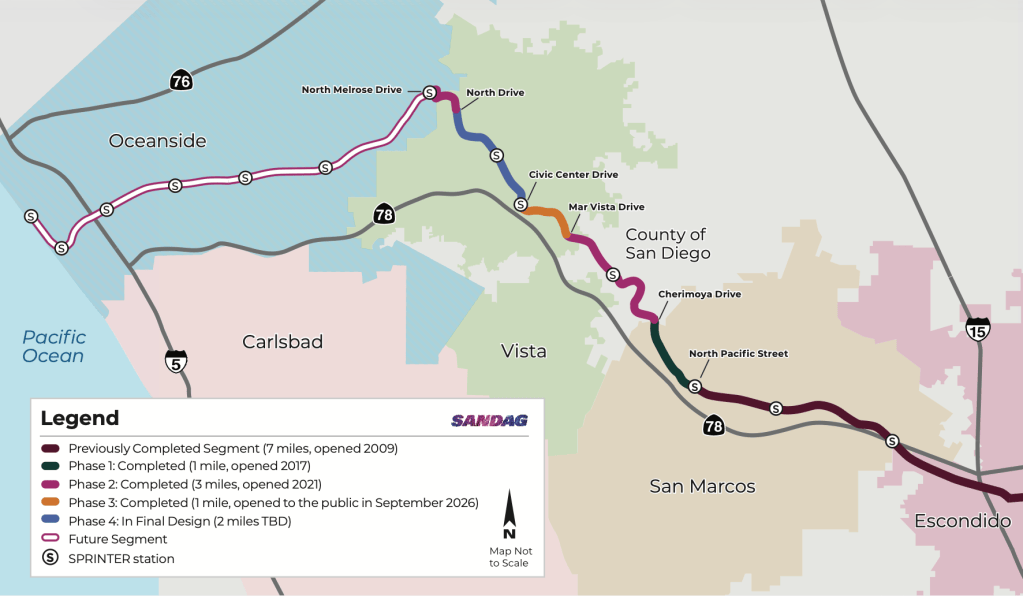
The Inland Rail Trail is planned as a roughly 21-mile regional pathway following the SPRINTER corridor between Escondido and Oceanside, passing through San Marcos and Vista along the way. Combined, these cities have a population of over 500,000 people.
The first seven miles, between the Escondido Transit Center and San Marcos, were built in 2009. SANDAG later made completion of the remaining trail a priority through its Regional Bike Plan Early Action Program, approved in 2013.
A one-mile section in San Marcos opened in 2017. Another three miles opened in January 2021, extending the continuous route into Vista, but not the entirety of the city. That left the new Phase 3 segment, along with another two-mile gap farther north in Vista.
When SANDAG celebrated the three-mile opening in 2021, the agency expected construction on the Mar Vista-to-Civic Center segment to begin in 2022 and be completed two years later. Instead, construction began in 2024, with completion finally arriving this month because of changes made to the original design.
The delay was not simply a matter of laying down pavement: the Phase 3 project required extensive grading and retaining walls because portions of the route sit as much as 25 feet above the railroad tracks. The $27.9 million project also includes drainage improvements, lighting, landscaping, fencing and ADA improvements.
The project was paid for with a combination of federal, state and local funding, including TransNet, the region’s voter-approved half-cent transportation sales tax administered by SANDAG, and grants from the California Transportation Commission’s Active Transportation Program.
“Completing this North County connection is a win for the San Diego region and is a testament to what we can achieve when we collaborate with our cities, transit operators, and the community to get things done,” wrote SANDAG Chair and Solana Beach Mayor Lesa Heebner in a press release.
The Last Two Miles Are Still Waiting
Saturday’s opening does not complete the Inland Rail Trail through Vista.
Phase 4, a two-mile section between Civic Center Drive and North Drive remains in the design phase. However, there’s no timeline for the completion of Phase 4, as funding has become an issue. SANDAG was awarded about $11.7 million through the state’s Active Transportation Program in 2021 for Phase 4.
However, earlier this year SANDAG had to return several grants to the state because it had fallen behind on its planning and design for those projects including the money for Phase 4. SANDAG staff believes it will be able to reapply for those funds and receive them when they are ready, but wouldn’t give a firm date when that will happen.
SANDAG officials also said construction costs had risen significantly since the original funding estimate. The agency plans to continue design work, reassess the project’s cost and schedule, and seek funding through a future ATP cycle.
SANDAG has set aside approximately $900,000 for additional Phase 4 design work and is considering whether the project can be built as a single segment or will need to be divided into smaller pieces.
Building a Regional Route
The Inland Rail Trail is intended to create a 21-mile separated route connecting communities along the SPRINTER corridor. SANDAG describes it as part of the region’s effort to make biking, walking and rolling more practical for everyday trips, while providing connections to transit stations and downtown areas.
For now, the Phase 3 opening means people can travel more than 12 continuous miles on a path separated from traffic, from Escondido through San Marcos and into central Vista…and that alone is cause for celebration.
“I look forward to SANDAG hopefully receiving state or federal construction funding for the final phase of the trail, so that North County can be fully connected,” Zuniga concludes.

Streetsblog has migrated to a new comment system. New commenters can register directly in the comments section of any article. Returning commenters: your previous comments and display name have been preserved, but you'll need to reclaim your account by clicking "Forgot your password?" on the sign-in form, entering your email, and following the verification link to set a new password — this is required because passwords could not be carried over during the migration. For questions, contact tips@streetsblog.org.