‘Grace Period’ Ends for San Diego County E-bike Ordinance.

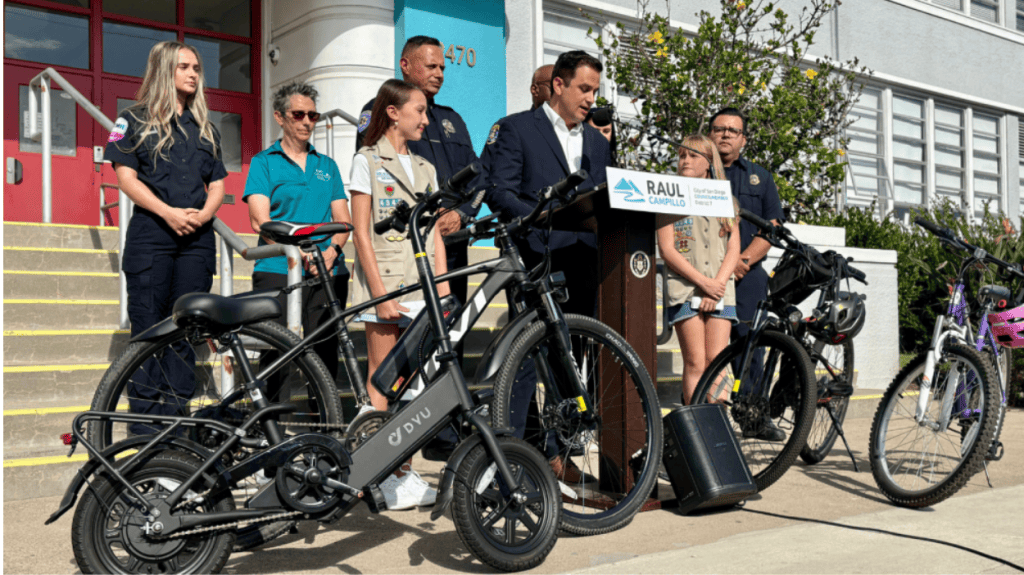
It’s been two weeks since San Diego County ended a grace period for City Ordinance O-2026-142, which prohibits persons under 12 years of age from operating Class 1 and Class 2 electric bicycles. The ordinance, which took effect Aug. 13, 2026, also requires riders under 18 years of age to wear a helmet, and prohibits e-bike riders from carrying a passenger unless the bike is equipped with a separate seat or saddle.
The legislative measure was spurred by a recent uptick in collisions involving e-bikes. According to a seven-year-long study conducted by researchers at University of California San Diego, “e-bike injuries increased sharply over the study period, from two incidents in 2018 to 1,566 in 2024.” The research also found that “injuries are disproportionately centered among children aged ≤14 years.”
To address these concerns, city officials phased City Ordinance O-2026-142 into law with a 60-day grace period for citations (which ended on Oct. 12, 2026). Now, community members and their children may face a fine of $25, plus court fees, for violating the ordinance. According to the San Diego Police website, this fine can be waived by completing the approved online electric bicycle safety course within 120 days of an issued citation.
How, exactly, will law enforcement determine which riders are under the age threshold? In an interview with FOX 5 San Diego, SDPD traffic official Nick Tamagni shared the police department’s approach.
“Usually when I make a traffic stop for someone on an electric bicycle that’s a child, they’ve already done something else that’s drawn my attention to them, not just their age,” said Tamagni. “They’ve done something that’s dangerous and I feel like I need to intervene and make sure that they don’t get hurt. Once I make that stop then I can determine what their age is, and if I find out they’re under the age of 12 they could receive that citation.”
These assurances, however, fail to address the broader implications of expanding police authority for traffic stops. A 2021 LA Times analysis of more than 44,000 bike stops “found that 7 of every 10 stops involve Latino cyclists, and bike riders in poorer communities with large nonwhite populations are stopped and searched far more often than those in more affluent, whiter parts of the county.” Despite the majority of bike stops involving Latinx members, the online electric bicycle safety course is not offered in Spanish. Additionally, neither the California Highway Patrol or San Diego County Sheriff’s Office have updated information on their websites regarding the new age restrictions, including their printable resources in Spanish. No future plans to address these issues have been announced.
Inconsistencies in program implementation and accessibility are further complicated by legal differences across the larger San Diego area. While several surrounding cities have implemented age restrictions for e-bikes–Carlsbad, Chula Vista, Coronado, La Mesa, Poway, San Marcos, and Santee–enforcement and penalties vary drastically from city to city. Carlsbad, for example, may impound e-bikes belonging to minors, while Chula Vista imposes fines up to $250 for third-time traffic offenders. In addition to fees and bike impounds, cities may bar riders from using city-owned facilities.
Critics of the e-bike regulations, such as the California Bicycle Coalition (CalBike), believe officials are approaching the issue the wrong way.
“If there are too many e-bikes clogging up a city’s streets, treat bike congestion the way you would treat car congestion,” says CalBike policy director Jared Sanchez, “build more bikeways, bike paths, and shared-use paths.”