La Jolla Planners to SANDAG: Move the Tracks Off the Bluffs Now

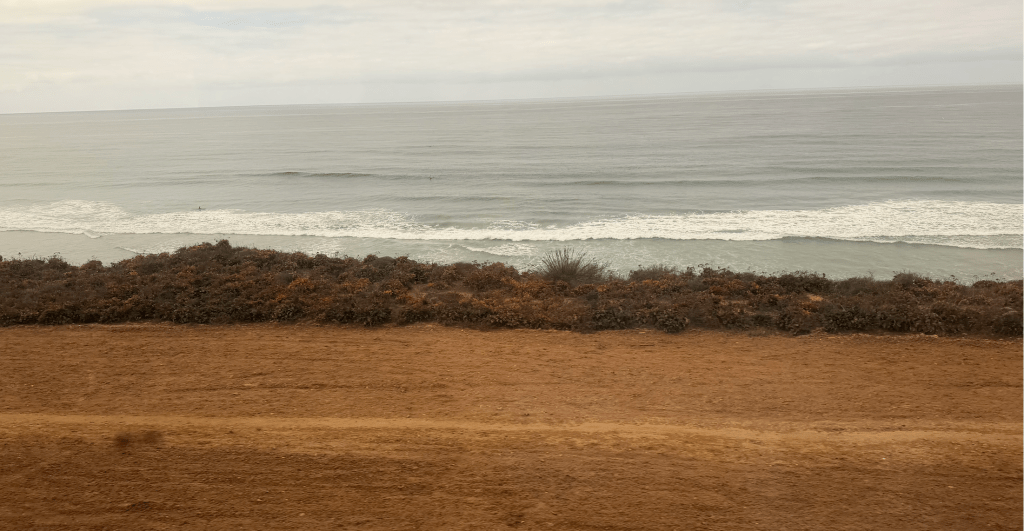
All railroad traffic connecting San Diego County with the rest of the nation was suspended again last week. This time it wasn’t Del Mar. It was San Clemente, where high tides and coastal erosion are steadily eroding the tracks.
Waves overtopped the tracks and caused further deterioration along the adjacent slope, including damage to some previously placed protective rock, according to the Orange County Transportation Authority. Amtrak’s Pacific Surfliner, Metrolink, and BNSF freight trains all stopped running through the area.
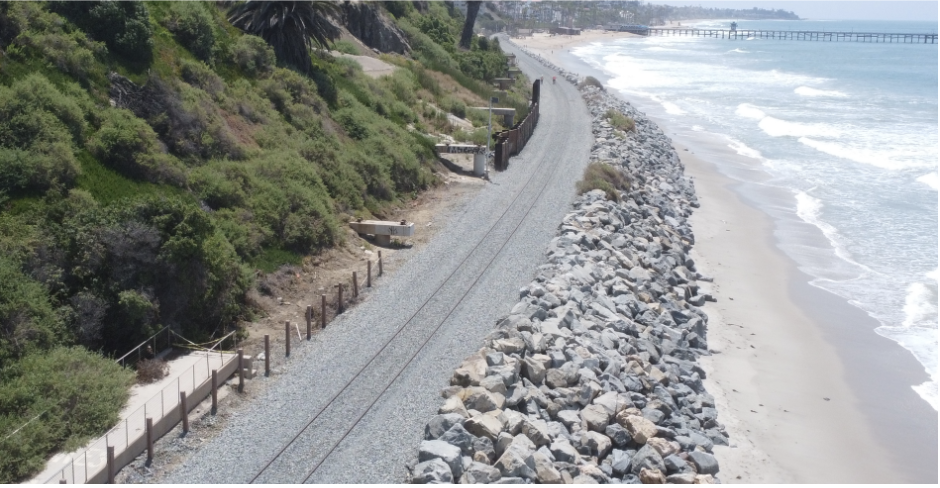
This is the reality of San Diego’s only rail connection to the rest of the country. It runs along an eroding coastline, and when the ocean wins, the region loses.
The Del Mar bluffs face the same threat. The bluffs are receding up to six inches annually in some areas, leaving the train tracks only feet from the edge in places. For more than 20 years, SANDAG has worked to stabilize the fragile bluffs with emergency repairs and multiple stabilization projects costing millions. But the sea level is rising, and the tracks need to be moved inland.
Nearly 4.5 million people ride this corridor every year. That includes 2.6 million on COASTER and Metrolink commuter trains combined, and 1.9 million on Amtrak’s Pacific Surfliner. When the bluffs give way, it’s not just an inconvenience. Leif Gensert, vice president of RideSD, puts it clearly. “It is a vital connection for communities in San Diego, Orange, and Los Angeles Counties and further north,” he says. And because of the erosion at Del Mar, “inaction could lead to this corridor being shut down.” That wouldn’t just mean more cars on the I-5. It would sever the region’s connection to jobs, education, and opportunity.
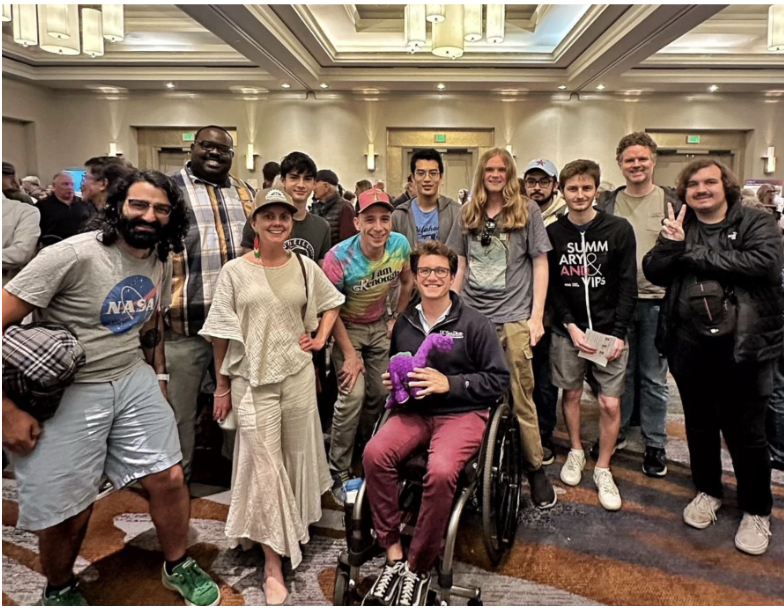
La Jolla Community Planning Association Weighs In
That’s why the La Jolla Community Planning Association (LJCPA) has officially weighed in on the LOSSAN Rail Realignment Project. The effort was spearheaded by Chris Halter, a La Jolla resident and transit advocate with RideSD, who presented the case for realignment to the LJCPA and helped turn local concern into official action.
In a letter to the SANDAG Board of Directors, the LJCPA backed relocating the corridor off the eroding bluffs via “any of the alignment alternatives currently under environmental review,” rejected the “no build” alternative, and asked the Board to move quickly to select a new alignment so design and construction can begin without unnecessary delay.
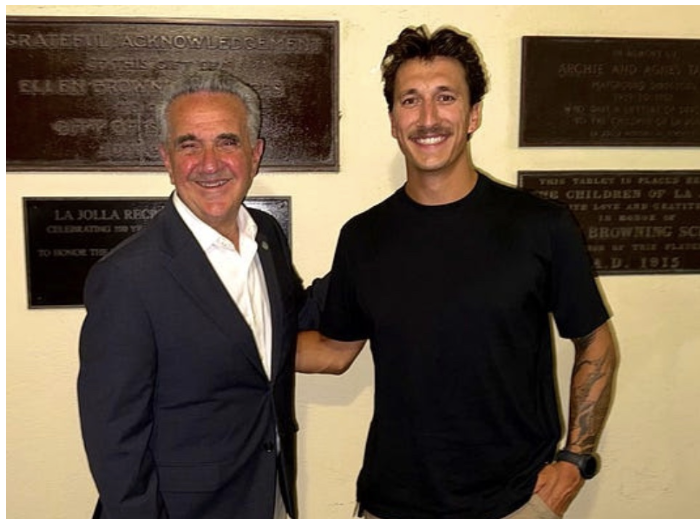
City Council President Joe LaCava, who represents La Jolla and serves as First Vice Chair of the SANDAG Board of Directors, was in the room when the LJCPA approved the letter. That matters. La Jolla is a coastal community that lives with the same erosion threat, and LaCava sits at the table where the alignment will ultimately be decided.
The reasoning expressed in the letter of support is straightforward and urgent:
- The bluffs are eroding at roughly six inches per year in some areas.
- The current temporary stabilization work is not a permanent fix.
- Every storm or high-tide-related closure disrupts commuter, Amtrak, and freight service for the entire region.
Halter, who got involved with RideSD through the urbanist YouTub channel Overhead Wire, said “Imagine life in San Diego if you could take convenient, frequent transit to the areas you love the most, that’s the future I want to build towards, and achieving that vision means starting today and solving key issues like the Del Mar bluffs realignment.”
Where the Project Stands
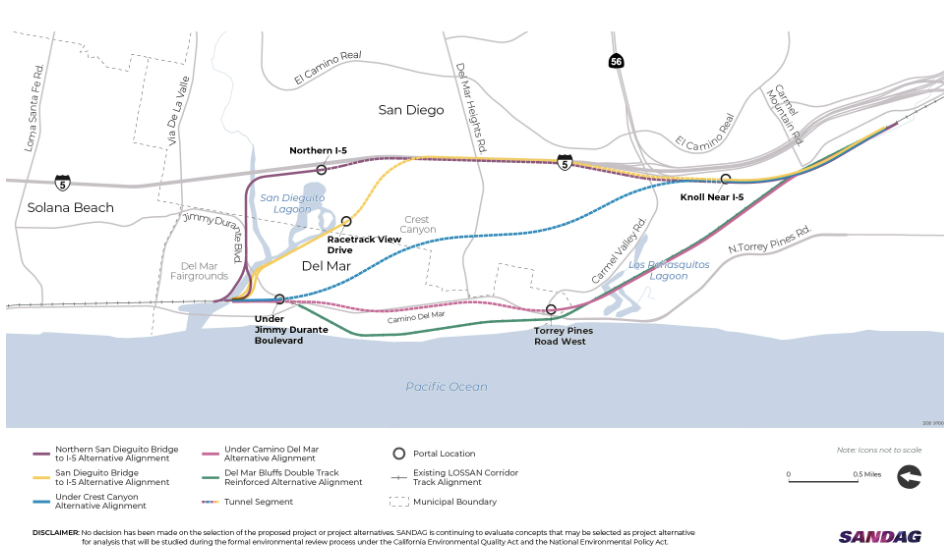
SANDAG is still studying multiple alignments and has not yet selected a preferred route.
The no-build option is still on the table. Some localized opponents favor a “no build” alternative that would leave the tracks on the bluffs and continue costly, ineffective stabilization. One went further, calling to consider abandonment of the 60-mile rail segment between San Diego and San Clemente altogether. SANDAG must study the no-build option under CEQA alongside the build alternatives — but rejecting realignment means more temporary patches. Phase 5 stabilization alone costs roughly $88 million and is designed to hold the bluffs for just 30 years.
The tunnel alignments, by contrast, would have most impacts limited to the construction period and would be largely underground, minimizing long-term disruption while delivering permanent protection for this critical transit corridor. The greater regional need, supported by riders, advocates, and community planning groups, points clearly toward realignment, not constant Sisyphean temporary fixes.
The Time to Act Is Now
RideSD isn’t alone in this fight. Gensert points to groups like Californians for Electric Rail, RailPAC, and Surfrider, all of which support realignment in some form.
Surfrider has been clear about why. As far back as 2020, the group wrote that “Armoring and stabilization will not ultimately be effective as the bluff is already eroding measurably every year at a rate that will increase significantly as sea levels rise. Relocation should be pursued as quickly as possible…”
With a clear path forward and key leadership in place, SANDAG must move quickly to choose a new alignment and secure the future of the LOSSAN corridor.
Want to weigh in? Gensert suggests supporting the alignment through RideSD’s campaign, and watching for SANDAG’s public meetings on the project. “If you can attend those in person and make your voices heard,” he says.

Streetsblog has migrated to a new comment system. New commenters can register directly in the comments section of any article. Returning commenters: your previous comments and display name have been preserved, but you'll need to reclaim your account by clicking "Forgot your password?" on the sign-in form, entering your email, and following the verification link to set a new password — this is required because passwords could not be carried over during the migration. For questions, contact tips@streetsblog.org.